I Love You, Uhh… Thank You.

It’s a funny trope in sitcoms. One person is in love with another person, and so they confess their love, only to be given a “Thank You” in reply. We cringe. We hurt for the confessor, and we feel bad for the one not in love. We are also impressed by the thanker, because it would have been easier to lie and say they too were in love, letting FutureThem deal with the fallout.

But it’s awkward. That is undeniable.

Thankfully, I found my person over 25 years ago. I love her, she loves me (and I’m really lucky she does, because I can be a LOT, y’all). But if we take that situation down a notch, I suspect there are many more mismatches. ESPECIALLY when introverts like myself are in play. Let me elaborate…

There are probably 5 people who I consider my very best friends. Then maybe a dozen who are way more than acquaintances, and I consider close friends. The next group in my expanding circle of indifference (is it a circle of indifference if the ones I care about the most are in the middle? Maybe it’s my circle of fading “difference”? But “difference” does not feel like the opposite of indifference, so maybe I’m using terrible words here. And because some of my friends read my blogs via translator to their native language, I have NO idea what this will imply because now I’m confused in English. And English is the only language I’m moderately confident with…)

I’ve decided to abandon the notion of an expanding circle, and I’ve decided to abandon that entire paragraph. My new geometric metaphor will be a pyramid. OK, in my head it’s actually a triangle, but since it will be stacks of friends, I’m not sure how they’d stand in a two dimensional stack, but I also don’t have NEARLY enough friends for a pyramid of people. But basically there are five or so people on the tippy top of my FriendAngleMid. Beneath them, are probably a dozen people who are close friends. These people I’m usually very comfortable around. Being with them doesn’t drain me emotionally. (Well, if I were with ALL of them at once, it would be horrible, and I’d be hiding in the bathroom texting my 5 cake-topper friends about how miserable I was at this stupid party I should have never thrown for my cat…)

Anyway. The next layer (we’re doing cake now, please keep up) is larger, and actually sort of fluid (not like we’re changing metaphors again, I mean they aren’t a solid group of people I could list). These are the people I don’t think about on a daily basis, but when I am near them, or interact with them, it’s enjoyable and I’m glad they’re in my life. Honestly, this is a large group. But because my brain is kind of a jerk, I couldn’t possibly name them all, because here’s the thing — when I’m with people in this group, they BECOME part of the dozen or so top-cake-layer friends. It’s weird, but this group of people is really really great. And I enjoy being with them and talking to them at least as much as my top layer friends. In fact, because I’m not with them often, in the moment, they’re pretty much temporary cake toppers. And not “pretend” cake toppers, but actual, bonafide Smurf figurines on top of my friend cake, celebrating our time together.

This is not the direction I thought this blog post was going. (I’m very happy with the cake metaphor though, we’re keeping that. Even though I’m more of an ice cream person. OH, and sprinkles would be perfect for the topper metaphor, except I want way more than 5 sprinkles… So we’re sticking with cake. Maybe Donna can be the ice cream. Because she’s like the ice cream, my favorite part — PLUS sprinkles, which makes ice cream even better. Yes. Donna is the ice cream, and she is COVERED in sprinkles.)

NOTE: This is why when I write professionally, I have an editor. Jill — I’m so sorry this is going to press. And I know you’re not technically my editor anymore, but you’re the only editor I’ve ever had, so when I think of an editor, it’s always you. Don’t get creeped out, I CLEARLY never think of editing. (Except I do, and I miss working with you, and OMG we should totally play on top of the cake metaphor soon.)

So, anyway most of the people I consider my friends are in that huge group of people that most people would call acquaintances. But I don’t consider them that, because I really, truly do love the people in that huge group. And in the moments I get to interact with them, I’m fully engaged, and fully real, and wouldn’t rather be anywhere else in the world. It takes emotional energy to spend time with these people, but it’s energy well spent. It’s like the reason I keep as much energy available as possible, because exhaustion from spending time with people you love is the BEST type of exhaustion.

It’s those people that make me both happy and sad in equal measures. I want them to be in my top cake layer, but I don’t interact with them often enough for me to feel comfortable leaning on them. They don’t know me well enough (very likely my fault) to lean on me when things get difficult. I WOULD totally be there if/when they need me, and I’m pretty sure they would be there for me — but again, I’m so bad at letting my guard down, that most people I consider friends don’t fully know me, and in turn, I don’t fully know them. And maybe that’s just how things work. We can’t have 1000 besties. Yet, to say these people are “less good” friends is just not true. Friendship is weird, and I’m not terribly good at it anyway. So perhaps I don’t really have any friends, and I just have human interactions, sorta. But I’m just gonna stick to my cake metaphor and say that the bottom layers of my friendship cake has a LOT of wonderfully sweet layers.

Oh, acquaintances. For me, these are people I tolerate, and I’m friend-LY with, but they’re the people with which I’d probably talk about the weather. (And not awesome weather conversations, just generic crap) These people are the raisins in our cake. They’re not like finding an eggshell in the batter, but you avoid them if you can.

And I’ll close with what I was going to write about in the first place. For introverts like myself, especially those of us who spend most of our time interacting online — it’s almost certain that my cake-topper friends, and my top-layer friends have no idea where they reside on my friendship cake. And I am very unlikely to be on the cake top of many people, or honestly even in their top layer. And that’s OK. Relationships don’t have be built on equal significance. People have different amounts of energy they can invest, and as long as the friendships work for both parties, it’s usually OK. Sometimes there is pain when we discover we don’t live on each other’s cakes at the same layer, but since everyone’s cake is different, direct comparisons don’t even make sense.

My only request is that you not pretend your raisins are sprinkles. Don’t lead raisins on. Be kind to them, but don’t make empty promises about how much we should “totally get together and make raisin bread soon”. It really hurts to discover you’re a raisin when you thought you were a cake topper.

Now I’m hungry. But not for raisins. They’re gross.

PS: Please don’t tell me where I live on your cake. Plus, out of context, that’s a really weird thing to tell someone. And I won’t tell you where you live on my cake either. But unless you’re a raisin, whenever we interact, you’re playing on top of the cake anyway. 🙂

Internet Sin Ingles

I have many legitimate friends whom I’ve never met in person. Some of my very best friends are a group of folks who met online and have remained close for well over a decade. There was a time when that was considered a naive misunderstanding of friendship, but I’m happy to say it’s slowly becoming more and more common. (This is not to imply catfishing is no longer an issue, or that you should blindly trust people online — but rather a simple statement that technology has given us the ability to foster real, lifelong friendships with people we only interact with digitally)

ANYWAY, one of my online friends is Luis. I won’t link to him, because he may not desire random people stalking him online, but nevertheless he’s someone I consider a close friend. Luis lives in Portugal. As I started writing this, I tried to remember how we met. And I honestly can’t remember. Maybe through Linux Journal? It doesn’t really matter, because now we’re just nerdy friends who happen to live on opposite sides of the planet. We often send each other links or thoughts about cultural differences, because we’re both fascinated by such things. And whether we’re sending memes about the metric system (and how silly it is we don’t use it in the States), or having real conversations about difficult political issues, Luis always sees me as a person and not a stereotype. I appreciate that.

Yesterday, Luis sent me to a website that links to a cool interactive map you can drag around to see what countries/cities line up with other countries/cities based on latitude. The site was not in English. Mind you, Luis speaks English fluently, but it’s not his native language, so it makes sense he would visit sites that are not English. He even noted that I should run the site though a translator because it was cool enough to warrant the effort. (And it was, he was right) But here’s the thing — I had no idea how to do that.

I’ve translated words and phrases with Google Translate plenty of times. (Heck, I double-checked the title of this post just to make sure my early elementary level Spanish was correct. And I’m sure it’s slightly different in Portuguese, but I’m struggling with my Spanish on Duolingo, I can’t add another language yet, lol.) But any time I’ve stumbled across a non-English website, my browser popped up a little “Hey white boy, you wanna see this page in English?” button and I could just click and see the page rendered in English. But this page did not trigger my browser to offer me this hand-holding. And I honestly didn’t know what to do.

After a bit of googling, I discovered that I could simply right click anywhere on the page, and there was a “Translate to English” option which instantly made the site readable. And then I could play with the interactive map (which itself was actually on an English website, go figure). But it was another reminder that as a straight white male, living in the US, I’m really playing the game of life on the easiest level. No, that doesn’t mean my demographic can’t have struggles — it just means I don’t ALSO have hurdles of race, gender, language, etc. to manage along with the life situations I find myself in. Heck, translating web pages in order to read them is something I NEVER need to think about. And realizing that’s a privilege is one step toward a friendlier world.

I appreciate you, Luis. Your friendship makes me a better person. 🙂

Monetization Sucks Beans

There’s a bitter sort of irony that people who enjoy selling things are rarely the people you want to give money, and those folks who deserve your money are cripplingly uncomfortable receiving, much less asking, for it. Mind you, this is a terribly generic take, which (might) be true for the majority of situations, but has so many exceptions it’s bordering on a trope or stereotype. So before you skip to the comments and call me a fool — lemme break down what I mean just a bit.

The sort of predatory salespeople we often (unfairly) associate with the “used car salesman” label, are not the most effective salespeople. The problem is, they’re moderately successful. That moderate success is built on narcissism, deception, selfishness, and a complete lack of empathy. They’ll encourage, and even push you to buy more than you need, and manipulate you to pay as much as they can get you to pay. The worse they screw you over, the better they feel they did — and so they’re self-motivated to be just the worst people ever. There are “crafty” versions of these salespeople, who wear the guise of giving a crap about you, but are really just more subtle about pushing those limits, and at the end of the day are only nice because it might benefit them in the long run. (referrals, repeat purchases, etc)

There are genuinely customer-focused salespeople. And oddly enough, they are the most successful type. The great irony here is that on a per-purchase basis, they are likely to make less profit. Yet, in number of sales, repeat customers, referrals, longevity, and countless other non-monetary metrics, they are far more successful than the smarmy, pushy salesforce. These salespeople are rare, and since the “crafty” salespeople mentioned above often appear to be this way — it’s difficult to find them, especially at first. But my hot take on the nuances of the psychology of sales is not what this post is about. I’m just avoiding the main point, because it’s awkward.

Beholden to NO ONE!!!

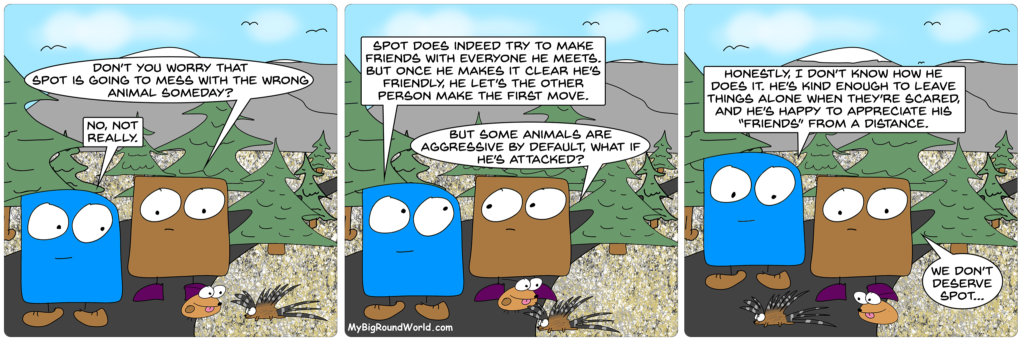
Some monetization is easy. Sorta. For example, early on (too early, honestly) in my web-comic-drawing-days, I commissioned a stuffed animal of Spot, one of the characters. I have those plushies for sale, and accepting money for them does not feel icky, because I paid for them. (I actually paid WAY too much for them, because I could only afford a limited run, and as such they cost way too much per unit, and so I sell them at cost plus a few bucks for shipping, and even then they’re way too expensive, but I digress.) I paid for them. I mark them up slightly (or not, see above), and I sell them to you. You have a tangible thing that you paid an amount of money to get.

Monetizing creativity, however, gets complicated and icky really quick. For a vast number of reasons. Let’s look at a few…

1: Creative Direction

Let’s say you decide to support my webcomic with a monthly subscription on Ko-Fi or Patreon. If I have tiers of rewards for patrons, it’s a little easier to get a sense of transactional value from your monthly donation. Maybe you see comics a day early. Maybe you get access to livestreams of me drawing. Maybe you get to see comics where Blue says swear words. Who knows. But with that sort of a system, I’d feel a little better knowing you have a transactional value for your donations. It means I have to adjust my creative endeavors in order to accommodate those things — but it works.

But most “lowest tier” support models are just a “big thank you” for supporting. And honestly, I don’t have tiered rewards set up, so if you support me (I have 1 supporter currently, at $4/month), you get nothing but a warm fuzzy feeling when you see Spot befriend a porcupine. BUT… because you’re giving me money, you might feel a bit of ownership over the comic. And that’s not entirely unfair of you. You’re helping make the comic happen, and shouldn’t you have some say on what does or doesn’t happen? Mostly no, of course, but it sorta *feels* like you should, doesn’t it?

This is far more pronounced with something like YouTube. If you’re supporting me with a YouTube Membership (I’m not eligible for monetization of any sort on YouTube yet, so don’t go try), and you’d like me to make more videos on shell scripting, and fewer videos on Kool-Aid taste tests — you might really feel like your opinion matters. And in that case, it really might matter. I mean, you’re paying me because you like the stuff I create. It’s pretty easy to feel comfortable requesting I make things that you like more often, since you’re literally paying me money. And since I’m an individual creator instead of a faceless corporate entity (like, Netflix for instance) — it’s in my best interest financially to listen to you. So… it gets messy.

2: Selling Out

If a creative person creates for money rather than the art itself, doesn’t that make them a sellout?!? WHAT ABOUT THE ART, MAN? Well… the “starving artist” trope is old and worn out, in my opinion. Plus it’s not even accurate. Have you heard of the Sistine Chapel? That ceiling was painted on commission, paid for by the Pope. Was Michelangelo a sellout? Maybe. Did that mean his art was any less art-sy? I’d venture no. It was probably better than it would have been if he couldn’t afford sandwiches for his lunch breaks. So while taking money in return for art doesn’t really make it less genuine or pure — it sorta feels icky. For some reason, if our motivation is to get paid, it often feels (and appears) like we’re only doing it because we’re getting paid. Which, is true. But is that bad? I mean, it shouldn’t be bad, but it feels like it is. Or it feels like it should be. Or… it’s very confusing, but it’s an issue creative folks have to work through.

Then, as if that whole situation weren’t complex enough, add to it the odd personal struggle many artists have with devaluing themselves and their work. It’s hard to charge a living wage when you feel like what you make isn’t work anything. Again, this disfunction isn’t true of all artists, but it’s really super mega common, and not just due to mental illness or abuse. When a creative person is creating, they’re just doing what they do. It *feels* like something anyone can do, or something that lots of people could do much, much better. (Look at my comic, y’all… if you love it, it’s not due to my amazing art skillz. Or, at least in my head there’s no way it’s because of my art skills)

So either what we do isn’t worth real money, or if we take money, we’re not doing it for the right reasons, or if we do take money we’re just shills trying to make a buck doing something that isn’t real work anyway. I guess what I’m saying is, monetizing creative endeavors is complicated. And often feels icky. And also often, it’s not something the actual creative people are good at doing even if they’re OK with doing it.

3: Being Flaky

Sometimes I can’t create things. There are any number of reasons why. For videos, perhaps I’ve lost my voice. Maybe I have a huge pimple or flushed cheeks that I’m showtoppingly uncomfortable with. At times I just run out of ideas, and need a vacation (of various sorts). The same is true with my comic, my writing, my silly cat photos, and all those other creative endeavors I do but haven’t yet shared with the world. (I’m sorry, and you’re welcome) What happens when I don’t do the thing that you are paying me to do? Will that $4/month subscriber of mine get angry if I don’t make a single web comic for a month? Maybe. And, maybe they’d be justified.

What if I fall into a fit of depression, and I can’t work at all for several weeks? I’d arguably need the monetization more than ever during those times, but it sure seems unfair to ask people to give me money for sleeping in the same underwear 7 days in a row. Heck, a few months ago, I got RSV which turned into bronchitis, and teetered on the edge of pneumonia. I’m a sickly dude, and that sort of thing happens to me. If I’m not able to be “ON” for an extended amount of time, does that mean I’m stealing from folks?

Yes, I realize there are responsible ways to prepare for situations like this. I could have a bunch of pre-drawn comics that are released automatically. I could make videos in advance and do the same. In fact, that would be a very healthy thing for me to do anyway, and I should really do that. But since I still have a full time job (because I haven’t successfully monetized my creative ventures), I can barely keep up with this just-in-time release schedule. So building up a buffer is a lot easier said than done. The flaky bit is just one more aspect of monetization that weighs heavily on me, and likely other creators as well.

No Great Answers

Oh, did you think this was an inspirational story that ended with a, “thus and heretofore we shall solve the problems inherent with funding fine arts…”? Yeah, no. This is just my blog where I think out loud. When I write out my thinky bits, it no longer has to live in my head full time. If you expected me to have the answer to life, the universe, and everything — I’m afraid “42” is the best I can do.

That said, I have discovered some things feel less icky than others, at least for me:

  1. If/when I ever get monetized on YouTube, I will not feel horrible about ad revenue. That’s largely because YouTube ads are the norm, and it doesn’t directly take money out of people’s pockets. (It takes a bit of time out of their day, which is arguably a much more terrible thing to do, but that’s another topic). I also like that YouTube has a “Premium” or “Pro” option so that you can pay a monthly subscription to YouTube and not see ads in videos at all. Creators supposedly still get paid, and users don’t have to watch ads. Once I’m monetized, I’ll be making a video about how the premium plan for YouTube is actually pretty great, and I would cancel Netflix long before I’d cancel my YouTube Premium.
  2. Affiliate marketing is really win-win. This one is weird for me, because it still feels icky. But honestly, it doesn’t cost the user any more money at all, and the creator is supported. I try to make it clear that I use affiliate links when I link to a product, but even then I feel like I’m “tricking” people in to buying stuff so that I get a percentage. And yet, it really isn’t that way. I suspect this is a personal issue I just get to work though. And my new “review” blog is me trying to add some value to affiliate links. We’ll see if that works for me emotionally and financially in the long term.
  3. Books. If (when, darn it!) I write books, I’ll be totally fine with selling them. That’s back to the transactional ideal though. You pay me, you get a book. I plan to write books that are self-published ebooks, maybe self-published print-on-demand books, and traditionally published as well. I have no problem accepting money for any of those methods. But also, writing books is hard. Or so I’m told. I haven’t done it yet. 🙂

Anyway. That’s my brain dump about monetizing creativity. It’s weird, and I don’t have a handle on how to do it properly. Perhaps I never will. But if you’re also struggling with monetizing your passions, and you’d really like to monetize your passions (sometimes, if you don’t have to, it’s a better option to not do so!) — know that you’re not alone.

Star Trek Me This

A while back I posted a poll on Twitter about which Star Trek technology would be the most significant. Usually when I bring the topic up in conversation, people jokingly say the Holodeck, and then say, “But seriously, warp drive is the most significant tech.” I generally argue that the replicator is the most overlooked tech in Star Trek, because its invention would solve world hunger, put manufacturing centuries ahead, and make scarcity a thing of the past. I was pleasantly surprised to see that on Twitter, most folks think along the same lines.

But, I want to elaborate a bit on the items, because sometimes I have more than 280 characters of thought on a topic. 🙂

Holodeck

The holodeck got little love on Twitter, and I understand. It seems the most frivolous of the items listed. In reality, the Holodeck is the one we’re probably the closest to actually having. It’s basically VR to the Nth degree. There are obvious differences, what with actual physical interactions and all, but VR is like a poor man’s Holodeck, and we can try it out today.

The use cases for an actual Holodeck are pretty incredible though, to be honest. The show generally stresses its usage as a vacation simulation, which would be important on interstellar trips. But the training, learning, physical fitness, and full immersion would make life better in so many ways.

That said, I think we all know, most Holodeck use cases would devolve into sexual deviance pretty quickly. Maybe that’s good, maybe that’s bad, I’m not here to judge. The takeaway though is that a Holodeck could do more than just entertain us. It could level the playing field for everyone such that privilege of wealth and/or location wouldn’t matter as much.

Transporter

There was some discussion on Twitter about whether the transporter was its own tech, or whether the replicator and the transporter were really the same thing, since the technologies are closely related. But since I was specifically referring to the transporter as a “mover of objects and people”, that’s what I’ll focus on here.

Quite frankly, the transporter tech creeps me out the most. The notion of converting mass into energy and then that energy back into mass seems fine for chairs and pepperoni pizzas, but for a living thing — it’s oogy. This is a trope in the Star Trek universe of course, what if people are “recreated” twice. What if the “pattern degrades” in the buffer. But I’m more concerned about what makes a person a person. When an object (or lifeform) is converted into the stream of energy, their existence is nothing more than a record of what they used to be. If you then rebuild them into that same record, are they the same person? Is there a spark of life that is more than matter/energy? Is there a soul?

Deep stuff, I know. But the transporter has always bothered me in Star Trek. And while I don’t want to get into a big philosophical debate about souls and the meat they may or may not inhabit — if the transporter idea for living things doesn’t creep you out, I’m a little worried about you.

Warp Drive

Arguably the most exciting Trek tech, it’s oddly the one that would probably affect humanity the least. Well, at least initially. With things like hunger, inequality, and scarcity eliminated, Warp Drive would allow for exploration without the sole purpose of exploitation. That would be amazing. But as a “first” tech? Yeah, I’ll pass. I don’t want to solve our energy problems by drilling for oil on a remote planet. That’s just putting the cart before the horse.

Obviously cool tech from a scientific standpoint. And not outside of the realm of “maybe someday something like what it sorta implies” — so I’m not anti-WarpDrive. I’m just not in the, “We need Warp Drive first” camp.

I already talked about the replicator, and why I think that would be the most important and civilization changing tech. But something that didn’t even make my list has gotten me thinking a lot lately…

Universal Translator

This is probably the most practical tech from a, “could we ever actually do it” standpoint. Not with the whiz-bang features of learning and deciphering an unknown language in near real-time, but as a way for people to communicate with each other regardless of their native tongue. Language barriers are more than just inconvenient. When we can’t communicate readily with someone, it changes how we see them. Being self aware enough to realize that our differences are insignificant when compared to our similarities helps — but when we can’t communicate, relationships break down.

When someone doesn’t speak our language fluently, we perceive them as less intelligent (even if we don’t speak THEIR language AT ALL). When we can’t express our intentions to each other clearly, it creates a mental us/them separation that bleeds into every other aspect of our relationship. When we can’t understand each other, we can easily dehumanize each other. And that road leads to the darkest of darkness. If we can’t communicate with people, we can’t get to know them. And if we don’t know people who are unlike us, it limits who WE are as a part of humanity.

There’s a much larger topic about diversity, inclusivity, and expanding our views of “us” — but this was just a post about Star Trek technology. So I’ll save the other stuff for another episode. 🙂

This Blog Might Get Weird

I’m doing all sorts of content creation these days. I’m doing videos, comics, newsletters, reviews (I’m figuring that bit out still… but I wanna keep doing it), podcasts, other podcasts, and I’m still doing silly tweets and cat photos, etc, etc, etc. I want to be a full time content creator someday soon, and so I’m just doing STUFF. But the thing about content creation, especially if you hope to *make money* doing it, is that it’s often important to “niche down”. And that’s super annoy-balls. I’m not really built to “niche-down”. (As you can tell by the long list of stuff I’m doing recently.)

So I decided this blog will be my free-for-all, anything goes, digital void to scream into. The tagline has always been, “the thinks I think” here on my blog, and dog gonnit (dog gone it? hmm… I’m not sure now) that’s what I’m going to do. So things might get weird. I sometimes think things that aren’t fully refined. I sometimes think through difficult social issues. Often times during that thinking, I’ll change my opinion. My goal is to do some of that here.

I hope to be able to leave the comment section open. Those who know me understand that I’m generally OK with dissenting opinions, and I truly listen to other points of view, sometimes even changing my point of view. In fact, I try really REALLY hard to be open to my own wrongness. If I realize I am/was wrong, and accept that — it means I become a better person. And since I have a LOT of room to be better than I am now, the only way I can get from point A (fairly crappy) to point B (moderately less crappy), it will be by accepting and changing the crappy things about me. So at first, for most posts — comments will be open, and I’m in favor of conversation on my personal, half-formed thoughts.

BUT.

I am a founder and level 73 member of the Cult of Kindness (please don’t use our unfortunate acronym). Anything other than kind interactions which assume the best of other people will be shut down quickly. Yes, there’s a certain irony in assuming the best of others, and shutting things down when others seem to not play by the rules, but at the end of the day, this is my blog. If I shut down conversation, I’ll try to do so kindly, explaining myself, etc. But if you remember from above, I’m still fairly crappy, so I’m sure I’ll mess up my pie-in-the-sky notion of doing things right. I just know that online discussions via social media, comment sections, etc. tend to get super ugly super fast. And that is something up with which I will not put.

But some of my very, VERY best friends were forged in controversial forum posts. One sticks with me. I won’t mention her by name, but I’m sure she’ll know who she is if she reads this. I was a very conservative Christian person at the time, and the conversation was with several atheists/agnostics about abortion and Pro-choice/Pro-life stances. We both left the conversation with the same general viewpoints we started — but each did change our understanding and feelings toward the “other side.” That interaction changed me. It was my first step in a journey of becoming a more empathetic, understanding, and intelligent person. She is now one of my dearest friends, and she’s one of the most wonderful human beings I know.

That’s what conversation can do. So I want to have the comment section here open, because I’d really love for more people to have that sort of experience. But it’s often “team flaming blowtorch” conversing with “team gasoline soaked underbritches” — so if things go sideways, I’ll lock/delete/etc. And like I said, I’m still pretty crappy myself, so I’ll probably screw it up from time to time. Anyway. Welcome to The Brain of Shawn. The thinks I think. 🙂

Linux is Just a Tool

Linux is the tool… not me.

There’s really only one job description: Problem Solver.

Sometimes that problem is, “I need to host a website that can scale as demand expands and contracts.”

Sometimes the problem is, “People want good coffee but aren’t interested in making it themselves at home.”

It’s so easy to get wrapped up in the tools we use to solve problems, we can forget that we’re more than expertise in a tool. In the tech world, it’s easy to define ourselves by the tools we’re good at using. I’m a Linux guy. I eat, sleep, breathe Linux. And while it’s sometimes important to stress our proficiency with a particular tool, when that’s all we are, we’re limiting ourselves.

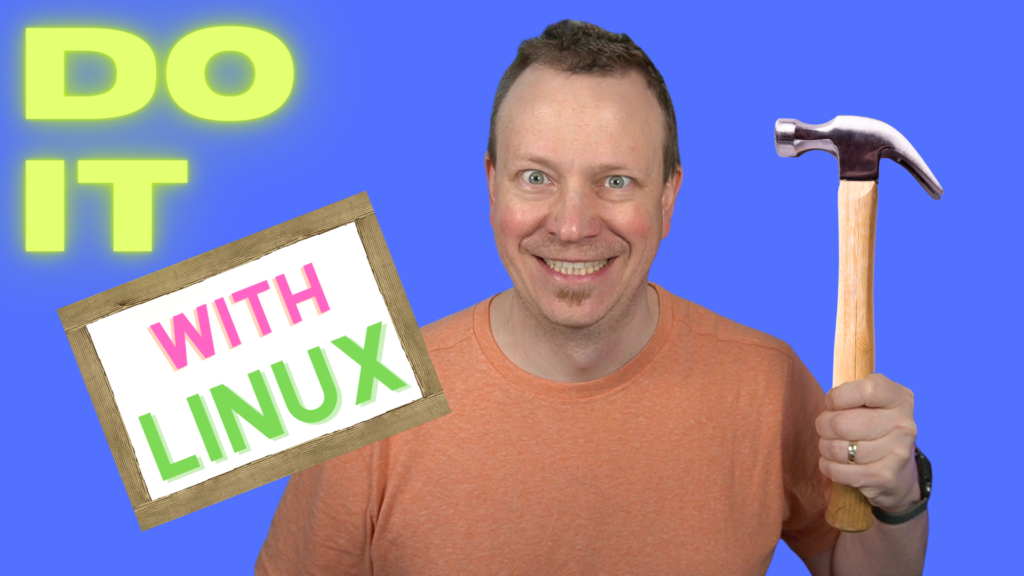
My son in law is a builder. He solves the problem of “people need buildings.” I think he’s pretty good with a hammer. But he doesn’t advertise himself as a hammer guy. See, the thing is, people want a building. Maybe someone good with a hammer is the ideal person to make that building. It seems like a really important skill. But he’s a builder, not a hammer guy.

In IT, Linux is a really great hammer. In fact, I think everyone should be proficient with Linux, because it’s the Swiss Army Knife of the Internet. Whether you want to build a website, create an app, move to the cloud, deploy a database, or mine Bitcoin, Linux will likely be part of the smartest way to implement those things. It’s ubiquitous. It’s powerful. It’s free. But Linux is just a tool, and we need to stop thinking about “Linux jobs” and start thinking about problems we can solve with our shiny Linux hammer.

I’ve had many jobs over the years. I’ve been a school administrator, manager of a university database department (Microsoft SQL!), writer, teacher, bus driver, help desk worker, and system administrator. In every one of those jobs, my Linux skills were invaluable. When I was a bus driver, my IT skills meant I was working for the company’s owner on their computers after work. Because I could solve their computer problems. It’s OK to focus on job opportunities that you can do because of your tools, but don’t go looking for a “hammer job”, look for a job that needs stuff pounded in, and come in fully prepared with your tools.

I know most of this seems like semantics. But it’s more than that. When we let our specialties define who we are and what we can do, we’re not only limiting ourselves, but we’re robbing our potential employers of our true worth. Does a background in Linux help you in a job focused entirely on Microsoft products? Yes! Because you’re uniquely skilled to advise places that Linux and Open Source may or may not benefit an infrastructure.

If my son in law were hired to install a deck onto someone’s home, when the materials arrived, he’d know what to do with all those deck screws. Even though he might be a hammer guy. He knows darn well a hammer isn’t the way to go with a box a deck screws. He’s gonna grab the impact driver and build a glorious deck. Even though he’s a hammer guy.

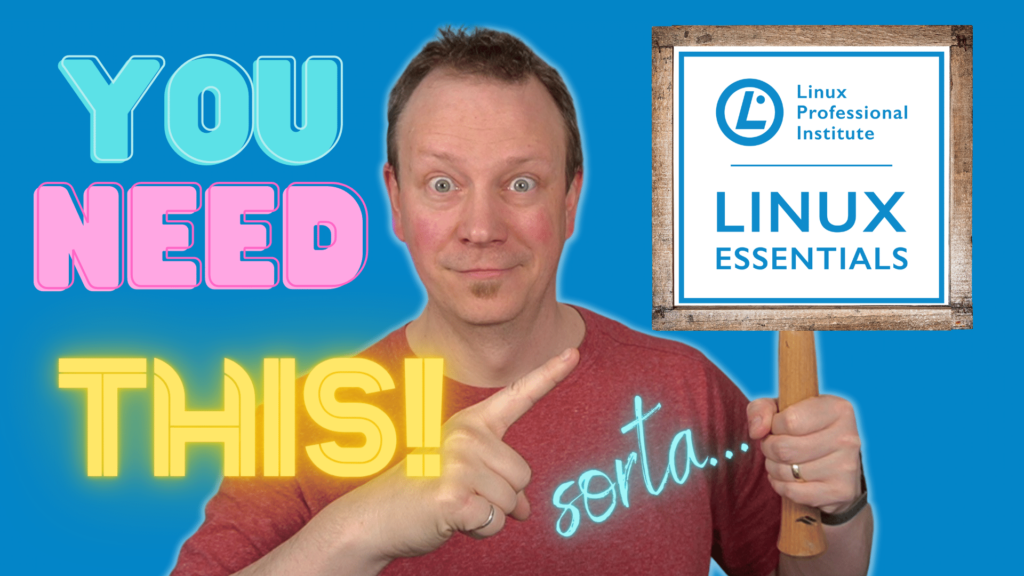
For me, Linux has been an incredible hammer. I’ve used it in all my jobs, even if that use is to know what not to do. I created a course that follows the Linux Essentials exam objectives from the Linux Professional Institute (LPI). If you take my course, it will prepare you to take the Linux Essentials exam. But… honestly I’m not convinced people should actually take the exam. I’d much rather they watch my course, and use that Linux knowledge to build their own set of tools. The course is free, and it requires no Linux experience or understanding at all.

So please, check out my course, and go look for some nails that need a good pounding.

My Linux Essentials Course is 100% free on YouTube

From Professional to Square One

I’m in charge. That’s… terrifying.

I created professional video content for about 12 years. That doesn’t mean I’m any good at it, but it does mean I’m comfortable with it. This year, 2022, I’ve decided to get back into making video, but with a twist: I’m doing it on YouTube.

Certainly over a decade producing hundreds (maybe thousands) of hours of video would mean I’d CRUSH things on YouTube, right? Well… not so much. But also, yes. Sorta. But not really. (I also wrote professionally for a while, this paragraph is not proof of that, lol) There are some things that have been easier for me as I venture into this new platform, and some things that are much, much more difficult. Let’s start with the good things. There are fewer of them.

GOOD THING: Comfort on Camera

I’m pretty comfortable on camera. I’m also pretty comfortable on stage. For someone who is an introvert to a crippling degree, it seems odd that I’m comfortable “in front”, but if you’re an introvert, you might understand. There’s something about being the person in the spotlight that makes the awkward shyness sorta melt away. In a crowd of people, I’m a wreck, but when people are supposed to be looking at me it’s somehow freeing. Or maybe I’m just a weirdo, I dunno. Nonetheless, many YouTubers struggle being on camera. That’s a huge advantage I have.

GOOD THING: Modest Start Already

When 2022 started, I had about 1600 YouTube subscribers. I’m no where close to being “monetized”, but those first subscribers are the most difficult to find. YouTube doesn’t give anything away for free, so you have to prove yourself worthy of views. Having 1000 subscribers seems to be some sort of entry level point where YouTube takes you a little bit more seriously. Now… those 1600 subscribers were slowly added over 13 years, and very few are active. Even fewer are interested in me as the content creator I am now. Most are here from the days of Linux Journal, or from a semi-viral video I had 12 years ago about breaking into my van. (really)

As I’ve been adding regular content in 2022, I’ve lost a TON of subscribers. I’ve gained some too, and the net change has been positive, but people have been unsubscribing to my channel about half as often as people are subscribing. Two steps forward, one step back. But my videos are getting 50 or so views after a couple days, and that’s a HUGE amount compared to folks starting from zero subscribers. So having a semi-active YouTube channel to start from has been a boon.

BAD THING: I’m Alone

When I made videos professionally, all I had to worry about was making videos. Every other aspect of the process was done by other folks. Marketing, publishing, selling, reviewing… all those things are up to me now. And YouTube is VERY competitive. Guess how many video thumbnails I created before starting on this adventure? None. (OK, a few, but that was back when I was still making professional videos and was instructed to put some content on YouTube as an advertisement, long story…)

Not only are all the aspects of being a creator, publisher, marketer, etc. on my shoulders, but guess what I’m not good at? All those things. So while most folks have to focus on creating their content above all else, the other stuff has been quite a challenge for me.

BAD THING: I Have a Lot of Experience

Or, more properly phrased, “I have a lot of bad habits, or outdated methods.” Don’t get me wrong, part of my “style” is just the way I am, and what makes people love me or hate me. But when it comes to the competitive world of YouTube content, my old tried and true methods aren’t what people want to see. The danger here is two-fold. On one hand, people might see me as boring and outdated with my simple jump cut editing, and headshot/slide/demo video methods of presenting info. But possibly even more dangerous is that I feel compelled to try to BE new and fresh and exciting.

For example, today, I’m going to attempt to shoot a silly intro for a video on user creation in Linux. It’s going to be me “creating” a user (myself) on the couch next to me. I’m pretty sure I can pull it off, but it’s going to take quite a bit of time to set up and edit properly. Will it be worth it? Even if it engages people more, is that what I want to do forever? Keep coming up with fancy video tricks to lure people into my content? I don’t know. It’s a weird combination of having tons of experience and being less-than-fresh in how I do things.

BAD THING: I’m Not Really a Niche Guy

To be successful on YouTube, at least at the start, conventional wisdom is to have a very narrow niche, and stick to it. Sure, once someone is very well known, they can expand a bit and the community they’ve grown will be more interested in the person than the niche, but at first, it’s important to focus on a very narrow aspect of what you love. For me, that’s IT training, with a focus on Linux and Open Source.

But that’s such a very small part of who I am. Even IT training only appeals to me because I want to help other people find their joy in life. Getting a better career, using tools that are free to learn with and free to utilize is a great path, but it’s only that — a tool on the path. I’m also interested in self-improvement, understanding happiness, conquering mental illness (which I know all too well, first hand), and countless other things that make me the whole human being I am. But if I want the freedom to chase those things, and a content creator is what I want to be — at least for now, being narrow is the path. And it kinda sucks.

BAD THING: I’m Old (but it’s not the age that is bad…)

Don’t get me wrong, I don’t think I’m too old for this. Not at all. I have tons of energy and excitement left to share. I don’t ever want to “retire”, and if you know me, I doubt the first thing you think about me is how old and out of touch I see. (I hope not anyway!) No, the reason that me being old is a “bad” thing, is that I’m just starting on this journey, but I have a lot of baggage. Mainly financial baggage. I have lots of bills, lots of debt, and very little past wisdom to lean on. So everything I’m doing now is in addition to a DayJob.

Yes yes, I’m blessed to HAVE that day job. I truly am. But the notion of going “all in” on a content creation career right now is just not feasible. Too many people are depending on me, and even if things go REALLY well, that doesn’t mean it’s financially viable for a long time. I’m OK with that, but it does limit some of the things I might do. I’m not complaining, or at least I don’t mean to. It’s just a case of starting at the 30 yard line doesn’t mean I’m closer to the goal than someone further back carrying less baggage. (That’s about the best I can do for a sports metaphor, lol)

BAD THING: I’m Soft

I don’t take criticism well. Not because I think I’m perfect, in fact, quite the opposite. Any time someone points out something I’ve done less-than-ideal, it solidifies in my head that I’m indeed a worthless failure. Please note, this a personal failing on my part. I should be able to take criticism, because I’m a grown man and should understand my value outside the things I create, good or bad. But knowing that truth and living it are different. And I’m not even talking about trolls. No, I mean criticism presented in a nice way. The depth of my self-loathing is staggering.

The irony is, criticism is VITAL to anyone who wants to improve and succeed. I know this intellectually. Yet, it’s a constant struggle that I expect will only get better the more I have to push through it. When I was a “professional” content creator, I was shielded from most criticism because there were so many layers between me and the people consuming my content. The only self-advice I have here is that I need to continue to be as genuine as I can be, and not seek out only the bad stuff. Building a community of people who you can trust with both your failures and successes is important, and so that’s what I hope to do.

BAD THING: I Hate Self Promotion

Remember that bit about me being the marketing department? Yeah… I really feel like a douchebag when I promote my own stuff. It feels icky. I even think it’s a good, worthwhile thing to promote… but for some reason when I promote it myself, it feels wrong. I’m just gonna have to get over it though, because if I don’t promote myself, no one will. So if I ever DO seem like a douchebag, please let me know. Gently. 🙂

Ending with a Bookmark:

When I started this post, I had 1827 subscribers on YouTube. I just checked, and I currently have 1822. Ouch. But it’s all part of the process, and I’m OK with it. Still… 5 people clicking unsubscribe in the past hour is harsh. 🙂

When I look back at this post in 2023, hopefully it will seem as a nostalgic look back at the beginnings of what was to become a thriving community of people who want to make the world a better place. That’s ultimately my goal, to change the world. Right now, I’m gathering like-minded folks, one human at a time. Feel free to join me… https://youtube.com/shawnp0wers

On the Occasion of Turning 46

Will his beard fill in? Check back in a year… lol!

As far a memorable numbers go, 46 is pretty low on the list. I cant’ really explain why it seems so ordinary, but it truly feels like one of the blandest numbers in the gamut of years old to be.

This past year has been anything but bland, however. I managed to not catch Covid. I started a web comic. I lost 65lbs (and gained back about 50). I started a new job. Heck, it’s been one of the more eventful years in recent memory, and that’s not just because of the pandemic. In fact, it’s easy to get lost in the every day, and lose track of the amazing things that happen alongside “life”. (Perhaps as a part of life, but that’s picking nits)

There are plenty of not-so-good things that happened this past year as well. A dear friend died. Our health insurance is going through some unwelcome changes. Several friends have been diagnosed with cancer. That’s the thing about life, it sorta comes at you like a fire hose. The unfortunate part is that it’s often easier to focus on being all wet, and lose track of how refreshing a good hosing down can be. So as I begin this 47th lap around the sun, I strive to focus on the positive things along the way. That doesn’t mean ignore the negatives, but rather not lose track of the good things that are often overshadowed by doom. I think depression and anxiety often make the bad times seem worse than they might actually be, and the good times to seem more fleeting. Brains suck that way. But nevertheless, I have a few hopes and dreams for the coming year, and I’ll jot a few down here:

Continue My Webcomic

I can’t explain how much I enjoy poorly drawing a comic 6 days a week. Anyone who knows me realizes the adventures of Blue and Spot are really just my daily journal, using silly pictures to express the real things happening in my life. Much like therapists use dolls to make it easier to talk about personal issues, my squares in a round world make it easier for me to express myself. Even the scary bits. I hope I continue with the comic, because it’s not only enjoyable, but also I think very healthy for me.

Make More Videos

I’m no longer a trainer at CBT Nuggets. My videos are still in the catalog, and I still get messages from folks online about how much they enjoy my training. And I’m not gonna lie, those notes of thanks are so cherished. But I’m not actively making videos for a living anymore, and I miss it. I have a lucrative job that I love (Linux sysadmin, managing a bunch of servers in multiple datacenters), but I miss the creation process. So, my hope is that I start making some videos and posting them to YouTube more frequently.

I’m not sure training videos are what I want to create all the time, to be honest. But teaching is something I love, so I expect they’ll be a big part of my YouTube channel. The nice thing is, at least right now, the videos don’t have to pay my mortgage. That gives me a little freedom to do what I like, and not worry so much about monetization, narrowing my niche, etc, etc.

Add Some Revenue Streams

Yeah, this sorta goes against the last paragraph, but I had a little job scare this past year — and it really made me realize that having multiple income streams is a recipe for better sleep. I don’t need to be Jeff Bezos, but if my job were to end, I’d like to continue living indoors and eating on a regular basis. I don’t honestly know what those revenue streams will look like, or if they’ll come to fruition. I’ve decided that whatever I decide to “monetize” will need to be something I truly enjoy doing. That means something in the creative field, which means monetization will be difficult. But, like I said earlier, I currently have a good paying job, so it’s OK if I flounder a bit finding my feet.

Learn to Find Joy

This is the most vague of my plans. I’ll always struggle with mental illness, but that doesn’t mean I have to let it win all the time. Finding joy can mean so many things. Perhaps I’ll find joy serving in the Church again (my frustrations there are another whole post, or twelve). Maybe my webcomic will continue to scratch both a creative and therapeutic itch. If I manage to get into a groove and exercise more, perhaps fitness will provide those promised hormonal boosts I never seem to get. Honestly, I hope all of those things and more will contribute to some more joy in my life. It’s been a difficult couple years for the whole planet, and I’m no exception.

Anyway, enough about me. I have the day off today (thanks boss man!), and my plan is to enjoy it as much as I can. My birthday wish would be that you (yes YOU) have a wonderful day as well. And if you’re reading this after the actual day? Yes, it still counts. Today can be awesome for you. Have a great $CURRENT_DAY everyone. 🙂

Interns, and College, and Certs. Oh My.

I do not have a college degree.

I think it’s important to lead with that, because while I’ve built a fairly successful career, I’ve done it without actually attaining a degree of any sort. I did attend college — a major university for 2 years, and a community college for a year. But in all that time (and all that debt), I never managed to piece together a degree.

Part of the problem is that like most college students, I changed my major multiple times. I started as an Electrical Engineer major. They seemed to make a lot of money, and, if I’m honest, that’s about all the thought I put into it. Then, in Calculus 3, I decided Electrical Engineers did things with numbers that just didn’t need to be done. I was also a Technical Writing major, and English major, and once I shifted to the community college, a “Liberal Arts” major. (I still don’t know what that actually means)

Don’t get me wrong, even though I didn’t get a degree, my college experience did actually help me significantly. I found myself skipping engineering classes at Michigan Tech, and hanging out in the computer labs all day (and night). There was a brand new NeXT computer lab, and it make Unix sexy. In fact, it was probably partially that time in a terminal window when I was supposed to be in engineering classes that made me fall in love with Unix/Linux.

Should I go to College?

This is question I get a lot. A lot a lot. It’s also a question I’m very hesitant to answer. Because the answer is a resounding maybe, and that’s not what anyone wants to hear. Another problem with the question is that the answer keeps changing. For example, back in 2012, I was asked this question at CBT Nuggets, and colleges were just starting to offer more than C++ programming as their only Computer Science class. Here was my response then:

This is still solid advice (well, as solid as advice from me gets anyway), but if anything, the college angle has gotten more attractive. Yes, education lags behind the cutting edge, but if you go into a university computer science program today, you’ll actually get a well rounded education on networking, operating systems, and actual useful programming languages. That still doesn’t mean it’s the right answer for everyone though, because college is very expensive, and you might be served better with a combination of certification programs, internships, and just plain old experience. When I was college-aged, there simply were no computer networking classes. Now there are, but there are also plenty of vocational programs that teach networking as well.

When I was college-aged, there simply were no computer networking classes. Now there are…

Let’s focus on my area of expertise; sourdough bread. No, just kidding, my technical specialty is Linux. And it’s an area that continues to attract more and more employers. Linux Insider posted an article during the pandemic pointing out the need for Linux-savvy workers, even as the industry moves away from traditional servers and hosts everything in the cloud. (Because guess what makes the cloud run? Yep. Linux.) And while colleges certainly offer Linux classes, they’re still lagging way behind current needs when it comes to employable skills. If you get your college degree, you’re still going to need to get certifications to not only prove your worth — but also to fill in the gaps dated college curriculum offers.

So College is a Waste?

Again, maybe. Here’s the thing, college does a couple things really, really well:

  • Teaches foundational knowledge that makes for better equipped professionals
  • Is structured in a way to teach a well-rounded educational base, wider than the specific topic of study
  • Gives students an opportunity to see if they like a variety of subjects (remember my Electrical Engineer “career”?)
  • Looks really good on a resume

And that last one is a real kicker. The current hiring process is largely automated at the early stages. Many employers use a college degree as a litmus test to determine whether or not to even interview a candidate. A college degree shows that a person has the stamina and hard work to achieve a difficult goal. Even if it doesn’t prove they’ll be a good employee, it’s often the first hurdle to even getting an interview. I personally think that’s sad, but I’m sure it’s a statistically viable way to sort the wheat from the chaff. Unfortunately, companies miss out on some really good folks who chose a different path.

I won’t lie, having a college degree does open doors, especially when applying for a job. It’s not the only way to get hired, but it’s important to judge if the cost and years spend getting educated at a university is worth it. It might be, especially if someone else is helping pay the bill. But going into $100k of debt will take a lot of years to pay off, even if you land a great job.

So What Else Is There?

This is where it’s much better to do what I say, and not what I did. When I left college, I started a small business. It failed miserably. (Like, really bad. It was ugly.) From there I got a tech support job at the local community college answering phones giving support to dialup Internet users. My experience in the computer labs at Michigan Tech, and my experience as a “small business owner” gave me enough resume fodder to get an interview. From there, after a series of very unfortunate events, I applied at a K12 school district for the technology director position. I shouldn’t have gotten that job, but I wrote a very compelling cover letter, and interviewed well. I also got very lucky. Getting lucky isn’t something you can prepare for, but all is not lost if you don’t go to college.

If you decide not to go to college, or at least not head off to university for a 4 year degree, there are a couple viable alternatives that will make you employable (even if it makes it tough to get past the automated resume filters):

  • Get an Associate’s degree at a community college.
  • Study on your own and get tech certifications from places like CompTIA, LPI, Cisco, Microsoft, etc.
  • Apply for an internship. If you can afford it, unpaid internships are an easy way to get experience.
  • Apply for an internship. Lots of interns get paid, if crappy. More on this later.
  • Get involved with some Open Source projects, especially if development is what you want to do.
  • Create an online presence. Certainly GitHub for developers, but also YouTube, Twitter, and LinkedIn.

I know this was the “no college” list, but a couple years at a community college is probably affordable, especially if you can stay home and commute. Having a degree, even an Associate’s degree, will open some doors. Even if your major is Underwater Basket-Weaving — just having the paper will potentially get you an interview.

Internships are incredible. They can be at a college, or a business in the field you’re interested in. They come in two flavors: Regular and crappy. Seriously though, some internships are unpaid. It’s the pre-employment equivalent of doing work for the exposure. It sucks. But, if there aren’t any other options, it’s a viable way to get your foot in the door and get some serious experience on your resume. There are many companies who pay their interns though, so don’t assume you’ll have to work for free. You’ll probably make a pittance, but it might be enough if you can still live at home, or have lots of roommates.

Lastly, the old adage is that nothing beats experience. That’s still true, especially if you can get to the actual interview process. An internship is incredible to put on a resume, but if you contribute to projects on GitHub (even documentation! EVERY project needs documentation!), or have projects of your own, that counts. And if a YouTube channel seems like a silly thing to start in order to get a job — I assure you, if you get to the interview stage, interviewers will check out your YouTube channel before they interview you. Same with blogging, tweeting, facebooking, linked-inning, etc. Put yourself in the hiring committee’s shoes, if they can “see” you before they actually see you, they’ll likely do so. Just be genuine, and it will be like an extended interview that you don’t have to sweat through!

You Avoided the Question Entirely

Yeah, I know. That’s what I meant at the start — it’s all maybe. Rather than a one-size-fits-all answer, hopefully this has given you a bit of insight to help you think through what will work best for you. Some of the ideas are valid regardless of your decision on college. All those bullet points above will make you more employable, and a better tech nerd in general. Getting involved in the community you’re interested in will only help make connections that might get you a job. Most of my “best” jobs have been because I knew someone who knew someone who saw my stuff. Good luck, and whatever your future looks like, I encourage you to seek after something you enjoy. If you don’t like calculus, don’t be an electrical engineer. Trust me.

Silent Days are the Worst

Social media tends to be a glimpse into the highlights of a person’s life. Don’t get me wrong, I’m the same person I am online that I am in person, but some things don’t get posted not out of shame, but out of inability. I try to make it clear that mental health is a real issue, and that I’m not immune to the one-two combo of anxiety and depression — but it’s difficult to write about it in the moment, and reliving the moment for the sake of documentation is often unpleasant.

Yesterday was that day for me. I was depressed. Very depressed. Self-sabotaging depressed. I did tweet, but even that was a “clever” tweet combining politics and religion in a way that was bound to draw hate responses. (It didn’t, because I wasn’t actually hateful, and my online friends are actually my friends, so I rarely get nasty anything online. I truly love you all.)

Anyway. Yesterday was bad. Today isn’t great, but I’m dressed and working today, so it’s significantly better. But depression has a funny way of hyper-focusing you on all the bad things in your life. Financial struggles. Relationship problems. Societal shortcomings and our response to them. Mortality. It takes those issues, and then coats them with a layer of insecurity, self-loathing, inferiority complexes, and hopelessness. Brains are real jerks.

I don’t have any profound message here — just wanted to document some crappy times along with the silly things in my life. I too wonder if my career benefits the world, worry I’ll never be able to retire, fear I’ll be a burden on my children or society when I’m old. I have existential crises, and I’m not always a great person to be around. But today is a fresh new day, and tomorrow will be another.

I’m doing OK today. Really. Just wanted to share the bits that aren’t fun to share. <3