Just don’t do anything at all? Yeah, I’m pretty sure that’s not a healthy motto to live by, but it sure does resonate with me. I’ve always struggled with perfectionism, and it sorta ambushed me this week. It’s been a while since I’ve been paralyzed by it. That’s mostly because my creative efforts of late have all been on my own dime, burning my own time.
But that changed this past week.
After literally months of stalling, last week I opened a Patreon page. Within moments, I had multiple supporters, or “Patrons”, and it was both humbling and flattering at the same time. People actually supporting me with their money smacks a little different than people being supportive in general. It’s a sacrifice real human beings are making in order to facilitate my creative endeavors.
So, of course the things I create need to be absolutely perfect. Because they deserve that, don’t they? They’re PAYING for me to create things both for them, and for others. With that additional income, it means I can invest more time into making even better content. And you see where this is going, right?
It’s currently Thursday. I’ve created exactly zero things this week. And yes, it’s been a particularly challenging week at DayJob, which required writing new code and inventing solutions to very specific problems with our very unique set of needs. So I could soothe my ego by claiming it’s been a super busy week, which of course is why I haven’t been able to let my creative juices flow.
There are people who believe in what you’re doing, and then there are people like Ben Klein (@fifthposition) who support you on Patreon ABOVE your highest tier! They invest their time and treasure to support your creations.
Ok, in truth there aren’t many people like Ben. ❤️
Like I said earlier, my perfectionism sorta ambushed me. I’d forgotten how crippling it can be to feel the pressure of expectation. It was a problem when I made training videos commercially, and apparently it’s a problem when I’m being supported by individual patrons too. The good news is I recognize it this time. It took years of poor performance and constant anxiety before I realized what was wrong with me in the past.
So what I’m say is, please don’t stop supporting me, those incredible people who do so financially and verbally/commentarily. I will get back on track in short order, and produce the same inconsistent mediocrity you’ve come to expect from me. (That self-deprecation? Yep, it’s still a feature as well, lol) I’m continually amazed and humbled by people desiring the same sorts of things I do. Luckily for me, those things include empathy and patience. I’ve really picked the best group of folks with which to bond.
Now if you’ll excuse me, I need to publish this before I decide it’s not quite good enough to share…
Before I start, it’s important to know that I’m not writing this to convince anyone to send money. We’ll be OK, truly. I’m writing this because much like depression, shame withers in the light. I don’t want the specter of “what if someone finds out” to live in my brain, rent free. And perhaps hearing our misfortune will help someone else avoid a similar one.
In order to understand how someone could have $12,518.42 stolen from them without noticing, it’s important to explain our situation over the past 18 months or so. Because on the surface, the notion of losing that much money and not noticing seems like wealth and privilege at an incomprehensible level. If exposing financial information makes you uncomfortable, you might want to click away, because I’ll be using some real numbers.
In the middle of the pandemic, my job changed. Part of that change included no longer receiving employer-sponsored healthcare. I receive a generous stipend, but it doesn’t come close to covering a solo plan. So we added some out of pocket money to the stipend, and started paying for COBRA. (That allows us to keep the healthcare from my last job, paying the full premium plus administrative fees for up to 18 months)
We also have adult children in their early 20s. They were underemployed thanks to the pandemic, and we have been helping them make ends meet. Plus, Donna’s part-time teaching position was even more part time this past school year. Add to that a massive repair bill on my aging pickup truck, existing debt from our barn experience — and the stage is set for a pretty rough financial gauntlet.
With our new expenses and decreased income, it was clear that we would be making less than we spend every month. We had about $17,000 in the bank, and about $20,000 of credit available across our 5 credit cards. Knowing that would only keep us afloat temporarily, we started doing everything we could to add income while decreasing expenses. Sadly, most of our expenses are fixed, and while we could have canceled Netflix, that small savings in the middle of a pandemic didn’t seem worth it. Anyway, we were going deeper into debt every month, but surviving.
Donna took as many sub positions as she could on the days she wasn’t teaching. I worked my DayJob as a sysadmin, and then started cartooning, writing, and creating training videos for YouTube. While my efforts might smack a bit of mid-life crisis, the bulk of my previous career was making training videos, and I’d been a professional writer for years at Linux Journal. The only oddball item was my daily comic, but since I found the process relaxing, it was almost a daily therapy session for me.
So for the past year plus, we’ve been using credit cards for everything possible, and paying the minimum balance due, with additional payments as more money came in. We knew our credit card debt would rise, and our bank account would dwindle, but the hope was to slow the bleeding until I started to bring in some serious revenue from my after work endeavors. It would certainly take a while, but the clock we were trying to beat was a combination of “not running out of money and credit” plus “we have 18 months of COBRA”.
I’d like to say we had a clearer plan, or even a more succinct goal. Unfortunately, we just had stress, chaos, and a faint hope that “something” would give. Perhaps I’d get a job offer that included benefits. Perhaps the school where Donna worked would offer a medical plan. Maybe my YouTube channel would take off, or my comic would go viral. But what it actually meant was many, many credit card charges, and many, many payments to credit cards coming out of our shrinking checking account.
And that’s how it happened.
Back in September of 2021, lost in our myriad of credit card payments, a new credit card payment posted. “Credit One Bank” took an ACH payment for $182.95 out of our account. That’s about the size of other credit card payments that constantly come out of our account, and at first glace I assumed it was our Meijer credit card, which is a branded card from one of the countless credit companies.
As the months went on, there were more and more payments from “Credit One Bank”, all varying from the $100-$300 range, which again, matched our other credit card payments surprisingly close. Looking back, I should have seen it. Of COURSE I should have seen it. There were 4 days in a row where $182.75 was taken out. And while I don’t remember seeing those payments, I probably saw them and assumed I was looking at the same payment. But I didn’t notice.
See, our account balances were changing in just the way we expected them to change. Our credit card debt was rising, and our bank account was shrinking. That’s not ideal, but it wasn’t unexpected. And so we weren’t suspicious that something was wrong. We saw that our money was going away faster than we hoped, and so we focused harder on making more money, not picking apart our bank statements. Heck, we probably subconsciously avoided looking at our bank statements, because we knew it would only add stress to an almost unbearably stressful situation!
And then this month, August 2022, 11 months after that first “Credit One Bank” payment snuck into our life, we ran out of money. Our mortgage payment bounced because its auto-withdrawal happened a couple days before my paycheck was deposited. I had already moved the posting date, because I saw the writing on the wall, but even that only kicked the can down the road a month. Our checking account was in the red, we’d gotten multiple overdraft fees applied on top (because other smaller payments were trying to clear after the account went negative). And only a couple of our credit cards had credit available at all.
It’s embarrassing. And it sucks. But things like Twitter verification, a Wikipedia page, and a well-known-in-certain-circles name does not always equal the underlying financial success it hints at.
So anyway, my paycheck posted, and our account was limping along in the black again. Since our credit was about dried up, we’d been strategically deciding what to pay and when to pay it. So our credit card payments, even the minimum amount due, had to be timed to our paychecks. And that brings us to this week. Yesterday, in fact. My paycheck wasn’t due to post until today (the 18th), and I was watching our account balance like a hawk, making sure nothing tried to clear before my paycheck was in there. And wouldn’t you know it, Credit One Bank was posting a payment for $168.64.
I KNEW I hadn’t made a payment, because after the mortgage fiasco, our balance was too low for that. And so when I logged in to all our various credit card accounts, trying to figure out why one of them automatically made a payment, I couldn’t find a payment for that amount. Anywhere.
And of course then I started looking at our account history, and quickly realized what I should have realized 11 months ago. Someone was making a credit card payment with our account, but it wasn’t us. Or at least, it wasn’t only us. As I searched the transaction history, I found that over the past 11 months, there have been 54 payments taken out. The dates and amounts are fairly random, but vary from $100-$350 or so. And added together, they equal $12,518.42. It turns out that initial $17,000 we had in our account wasn’t dwindling as quickly as we thought, or at least we weren’t “dwindling” it.
I spent most of yesterday talking to the bank, and to the police. Today I have to drive back to the bank (and hour drive, one way, ugh) to finish closing our compromised account and set up a new one so we can continue making our mortgage payments, car payment, and credit card payments. And now, I need to fight to get money back from “Credit One Bank”, even though in my communications with them yesterday have proven to be anything but helpful.
Our bank, Straits Area Federal Credit Union, has shifted a bit. At first, they told me all they could do was stop further withdrawals by charging me a $25 stop payment fee. But after talking to the police officer as I filed a report, he encouraged me to go physically to the main office, and talk to someone a bit higher up the food chain. I’m glad I did, because now they’re going to reimburse me for the previous 60 days, and for some reason the first 60 days of fraudulent charges. Assuming that happens (I’m signing paperwork today), it will put $4,595 back into my new account. The remaining $7,923.37 will likely never get recovered. But I will be sending all the information to “Credit One Bank”, and hoping they do the right thing. Regardless of the outcome, it will take months before I know anything.
I’m not gonna lie, while that $4,595 will be incredibly helpful in the short term, we’re clearly still teetering on the edge of disaster. Thankfully, there’s a bit of good news in this bleak story.
When summer started, Donna clearly couldn’t get anymore subbing jobs, so she applied for a part time position at one of our favorite places on earth. McLean & Eakin Booksellers. She got the job, and I’ll be honest, I’ve never seen her love what she does more than when she’s working at the bookstore. The owners must recognize how much she was made for the job, and without prompting, called Donna in to offer her a full time, year round position. And believe it or not, this small town, independent bookstore provides health insurance for their full time employees.
Health. Care. Insurance.
Our COBRA eligibility runs out in November, and we did not have a plan for what we were going to do after that. The middling insurance plan I was quoted to buy on our own was over $30,000/yr, and that was without dental or optical. Donna getting a job that provided healthcare was unexpected, and the most amazing news we’d gotten in a very long time. I don’t even know what the plan will look like, but it honestly doesn’t matter, because whatever the benefits include will be more than that nothing we could afford once November hits.
I cried like a blubbering idiot. And that, I’m not ashamed of.
Look, we’re far from being financially stable. My napkin math shows that we have about $65,000 in credit card debt, one mortgage with $60,000 remaining, another with $100,000 remaining, and a car loan with $13,000 still outstanding. My DayJob isn’t in immediate jeopardy, but I maintain datacenters for servers that operate in the cryptocurrency world, so longevity and stability are not guaranteed. But in spite of this current financial setback with Credit One Bank, we actually have a bit more hope than we’ve had in a while.
Donna will be working full time, starting some time before November. My YouTube channel was recently monetized, and while it’s only bringing it $100 or so a month, it’s a start. I’ve been working with an editor about a potential book deal, and while my comic hasn’t taken off — I still really enjoy it, and perhaps someday others will enjoy it too. I’ve even built up enough content on YouTube, that I don’t feel bad starting a Patreon page for people who want to support my creative endeavors. (It’s not live yet, but once I get the patron benefits sorted this week, it might be one more trickle of income)
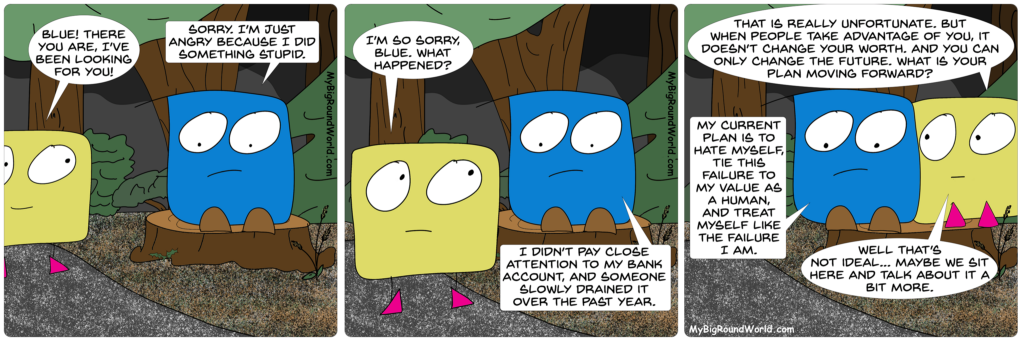
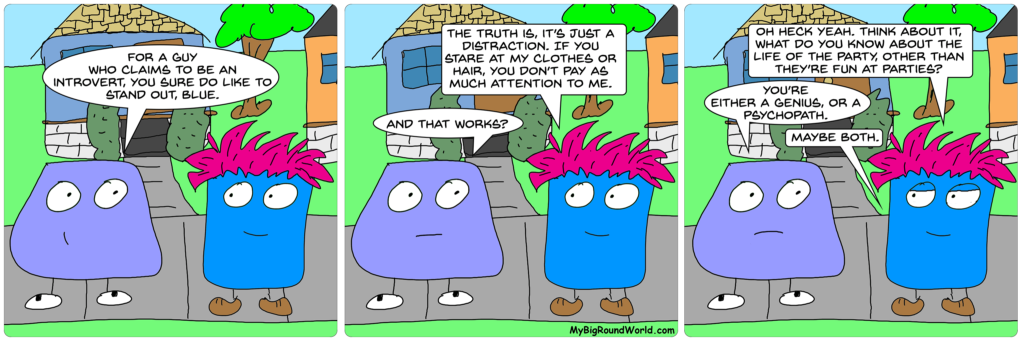
So yeah. It’s been a rough month. But it’s also been a good month. We really will be OK, and my intent is certainly not to make anyone worry about us. We didn’t fall for a scam, and yet we ended up losing the bulk of our “cushion” in arguably the worst time ever. My hope is that everyone looks a bit closer at their checking account after reading this, and if you do end up a victim of bank fraud — know that someone else’s evil is not a character flaw of yours. Be kind, maybe especially to yourself. It’s easy to be like Blue, and since I draw him, I know it first hand.
Five years ago, my wife Donna and I invested our entire nest egg into buying an old farm in Brutus, MI. We refurbished the old barn, and created a young adult ministry, because there wasn’t one in the area. It turned out almost exactly like we pictured it, but then when it was still in its infancy, Emmet County shut us down. It was actually quite ugly, and they threatened to condemn the property if we even had a bible study in the farmhouse.
“The Barn” in its heyday…
So now, rather than the vibrant ministry we hoped to launch, Donna and I have a mountain of debt, a second property to pay taxes on, and a really nice barn we’re not allowed to use. It’s really easy to feel angry, foolish, and defeated.
But.
The young adults who were part of the fledgling ministry did not get shut down. They continued to meet in other locations. They kept meeting for worship music, bible studies, and fellowship. In fact, the core group of people still meet to this day, years after the actual barn was shut down. They still call their group “The Barn”, even though many of the current group members were not around when the actual barn was involved.
Over the past 5 years, 4 couples who met or got their start at the barn have gotten married. One of them is my eldest daughter, the singer in the video clip above. Her and her husband are expecting their first child, and our first grandchild, in September. The group of young adults that got started at our short-lived ministry continues to grow and flourish, even though my wife and I are no longer a part of it at all. Our barn sits empty, but I’m not sure I can consider it a failure.
Our goal when we started The Barn was to create a community of young adults who could grow together, and lean on each other as they transitioned to adulthood. We always intended for the group to take over once it was established. We wanted… exactly what happened. It just wasn’t exactly the way we expected it to happen.
Donna and I can always make more money. We can have a bit less extravagant retirement, which can start a few years later than we intended. Because when we decided to invest everything we had into the lives of the young adults we cared for, our intent was to change their lives, not create a business. And their lives are not only changed, but continue to change new lives who only know “The Barn” as a weird name that references some place they used to meet.
The Barn is both the biggest failure, and largest success we’ve had the pleasure to be involved in. It didn’t turn out like we planned, and yet it also ended up much better than we ever hoped.
A few months back, I got an email from GLE, which announced your new position as CEO (congrats!), along with other updates about service, fiber internet rollout, etc. One of the things I noticed in the email was that Great Lakes Energy doesn’t actually produce electricity, but buys it from a local supplier. I’m sure it’s more complex than that, but nevertheless, it got me thinking.
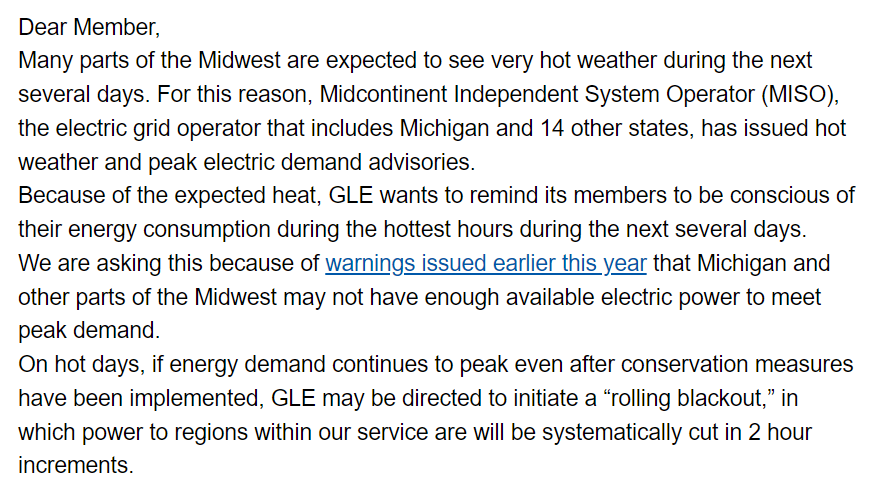
A couple years ago, Great Lakes Energy started a truly remarkable endeavor to provide fiber-to-the-home for all GLE members. And Truestream was born. It was, and continues to be a huge project, which I’m sure cost many millions of dollars to roll out. And as a business-class fiber customer at my farm in Brutus, I can tell you, the efforts were successful. I’m assuming there were grants and other financial resources available to you in order to help fund the connection of so many folks who otherwise had no decent options for broadband Internet service. I wonder if the same might be true for electricity… A couple days ago I got this email:
And it got me thinking. Again. What if Great Lakes Energy worked with its members, and facilitated the installation of solar and/or wind generation at the individual homes? Many of us are in rural locations, and have the space to install systems that would not only offset carbon emissions, but with grid-tying, you could buy some of the electricity you provide from your own people.
I’m not saying this without understanding many complexities exist. While solar installations would certainly help with the issue presented in the email, solar power is timed very poorly for energy needs in the winter. This is exacerbated by our eventual need to move away from burning fossil fuels to heat our homes. If we all use electric heat pumps (which, we totally should, and almost certainly will eventually), the demand for electricity will increase at night when the sun is not helping produce any power at all.
Good Point, We Should Forget the Whole Thing…
But see that’s where Great Lakes Energy could really help blaze a trail. Who better to solve the issues of energy production, distribution, storage, and independence than an electrical CO/OP who has already proven their ability to think big, and actually follow through? There will always be people like me, who have an off-grid inverter setup, with a battery bank in order to make it through potential downtimes. And less nerdy versions of me who have a standby generator in case things go sideways. But those solutions are very self-focused, and if we want to be leaders, we need to work together as the CO/OP we are. There are so many things individuals like myself can’t do alone. But a huge part of those challenges are just another Tuesday for you. Things like:
Testing, approving, and possibly bulk purchasing hardware for grid tied inverters, solar panels, and mounting hardware that will work well, work safely, and provide people with the appropriate hardware for their needs and/or desires.
Working with local government entities to provide clear, simple guidelines, and when local governments are unwilling to cooperate, shine light on the issue so that progress doesn’t die in a pile of paperwork.
Work with installers, either hiring, contracting, or at the very least facilitating reputable professionals connecting with members.
Work with folks like myself, who are passionate about such things, to educate and even help people find the line between DIY and professional installations. What can we do on our own? What should we? What shouldn’t we?
Heh, Yeah, We Already Do That
Well… about that. Yes, you have multiple programs. Three that I’m aware of, kinda. Two of them seem like the same thing worded differently. But they’re not nearly the same level of active participation as the fiber Internet initiative. Let’s talk about them, purposefully from my viewpoint, because I suspect I’m more aware of these things than most folks, and much less aware than you.
Community Solar. This appears to be a partnership with a 3rd party organization, Spartan Solar. You sort of “adopt a panel”, which is installed and maintained in a solar farm by the Spartan Solar folks. You pay for a panel, and get credited by the energy it produces. I’m certain those credits are based on averages and percentages, and are reduced by maintenance cost and financial solvency, etc, etc. On paper, this is very likely the absolute best way to implement solar in the most efficient way possible.
The problem is, it’s just a line item on a piece of paper. And apart from an abstract good feeling, there aren’t any real benefits to the end user. If your power goes out, your adopted solar panel doesn’t know, doesn’t care, and will not keep your cellphone charged so you can watch netflix during the ice storm. I suspect the interest in Community Solar isn’t zero, but also isn’t earth shattering. It’s just moving numbers on a monthly bill. If we’re going to change the world, it needs to feel real.
When you produce power on your roof, and you can see graphs of output and usage, things change. If you want to see someone get radical about energy savings, show them the data. Not abstract kilowatt hours of monthly usage, but daily watts produced and stored vs watts used. The reason people don’t take climate change seriously is they don’t experience it first hand, at least not in a way that feels real and addressable. Am I suggesting we gamify our electrical usage? YES! Members connected reliably to the Internet with fiber only makes that more possible. If people realize it takes a dozen huge solar panels in full sunlight to run their air conditioning, it becomes a tangible reason to add insulation and get better windows.
Net-Metering and Buy-All/Sell-All. From what I can tell by reading the PDF files (which were clearly written by lawyers), this is the ability for a limited number of members to pay extra for a smart meter, and then sell back excess energy they produce. This is great, truly. That said, I have no idea if the 10MW limit specified in the document has been reached, or if the program is still available. I also don’t have any idea how much extra members need to pay for smart meters to facilitate the process. And most importantly, the “how-to” bit is not only confusing, but intimidating and pretty much unattainable without lots of professional investment.
Such things are complicated, and intimidating. I get it. When you add governmental regulations, both local and regional, it’s a non-starter for the vast majority of folks. Even myself. But like I mentioned above, these regulations and interoperability with governments are what you do every day. What if there were a group of local installers, electricians, buying cooperatives (ahem, GLE), and people who know the intricacies of rolling out real community-based initiatives? What if you could show graphs on your website of the percentage of power purchased from members vs from a 3rd party? What if a farmer with a south-facing clearing could install enough solar panels to make a bit of income each month while supplying all their own power/heating/cooling needs?
OK, Sure, But That’s Not a Plan.
Right. My hope is that we can make it easier for people to install things like solar. This will require several things:
Education. This is the part I can actually help accomplish. Remember when I was one of the first folks to get fiber Internet installed, and y’all took pictures, etc? (It’s ok if you don’t remember, you weren’t there personally) Let’s expand that idea. Let’s highlight various solar/wind/battery/inverter installations members have in place, or plan to put in place. I’m an educator who is comfortable making video. Let’s show people what’s possible!
Easy Access. Most people I know with solar installations got the hardware and labor as part of a contract, which makes their payment and saved electrical usage just about a wash. That requires capital, and I would bet there are governmental grants to help facilitate such things. I’m really nerdy, and really into this stuff. Yet I have no idea how to get something like a solar panel system installed. That’s partially on me, but it points to a bigger problem: No one knows what is possible, much less how to accomplish it.
Incentive. It needs to be sexy. There is so much more we need to do than just putting solar panels on houses. But getting people to be active participants in the energy conversation seems like a really good first step. This is mostly marketing, but wouldn’t it be great to have an actionable alternative to the rolling blackouts mentioned in the email above? “Use less power” is an admirable goal, but long term it’s not sustainable. The future will be powered by electricity, and being proactive about scaling our power needs before garages are filled with electric vehicles seems like an even more admirable goal!
I truly can’t think of any other entity more poised to lead the way toward a cleaner, more self-sufficient nation. Once we are more actively involved with producing electricity, and owning the process — things like transitioning away from propane furnaces become a much easier conversation. But the first step is to get people interested in having the conversation. And making everyone an active part of the process seems like a good way to start.
So drop me a line, Shaun. Let’s change the world, starting in one of the most unlikely places — our own backyards.
It occurred to me today that I’m not really sure if the things I publish are the things I allow to get out of my think-meat, or if they’re things I can’t keep inside it. It probably doesn’t really matter in the grand scheme of things, but my brain (jerk that it is) thinks a lot. A LOT.
Now, I’ve always assumed that I objectively look at all the thinky thinks, and then determine, “ah yes, this kernel of insight is worthy of the masses.” But, yeah, no. I’m rarely, if ever, proud of the stuff I write. I might be proud of myself for sharing things, but never do I think, “This. This is what people need to hear.” Other people say things much better than I do, and they’re almost always more qualified to say things betterer than me. (Apart from a very, VERY narrow area of expertise. I’m pretty confident with my Kool-Aid making skillz…)
So what I write, like this for instance, is almost certainly not because I think it will make the world a better place. And I know I don’t do it for praise, because for my spheroid-jiggly-ponder-box, praise is a double-edged sword.
(Short explanation: “Shawn, that was incredible” makes me very much assume that whatever I just created is now the low bar for all future creations, and if it really WAS good, then I might as well not bother, because I’ll never create something that good again, and if I make something worse, I’ll let down everyone.)
I guess that means whatever I end up publishing is just think-juice I couldn’t quite keep inside. I suppose writing is my emotional outlet. But even that doesn’t explain why I click “Publish”, because there are plenty of drafts here on my bloggity-blog that will never see the light of day. So it’s more than just a need to write, because writing doesn’t need publishing to be an outlet for emotion. (See also: Diaries. But no, I don’t have a diary. OMG, is *this* my diary?) So why do I publish anything, ever?
Maybe narcissism? Maybe I seek the self-destructive praise of others? Maybe I hope that one person will read my escaped thoughts and realize they’re not alone in this weird, judgmental world? I honestly don’t know. But for some reason, I often feel compelled to share my thoughts, even when they’re weird, or personal, or scary, or all of the above. Apparently creating and sharing are very different endeavors. A lot of what I create isn’t shared — but a surprisingly large percentage of it is.
I was talking to a friend today about the “highlight reel” aspect of most social media. Many, or maybe most folks share the best and happiest parts of their day, or they make sure the part of their persona that lives “in frame” is squeaky clean and perfect. There’s the other side of that coin, when people post about how bad things are, looking for either help, or pity, or even just attention. But the mundane seldom makes it on Instagram. Or blog posts. Yet, here we are.
SO my fellow creators, I have two questions: 1) Why do you create? 2) How do you decide what to share?
I’m currently depressed. I think. I’ve been diagnosed with Major Depressive Disorder, and so maybe any time I’m depressed, that’s the “reason” it happens. But also, depression is different for everyone. I’m confident of that, because depression is often different for ME, and I’m the same person as me. Still, I wonder if what I’m experiencing now is depression, or frustration, or post-covid-exhaustion fueled existential dread. Also, does it matter?
You’ve probably heard the story of the girl and the starfish. It’s been adapted from The Star Thrower, by Loren Eiseley. Here’s my quick verison:
A man was walking on the beach, and came across a little girl. She was picking up starfish from the shore, which were washed up during a storm and stranded when the tide went out. As she feverishly tossed starfish after starfish back into the ocean, the man asked her what she was doing.
“These starfish got stuck when the tide went out, and if I don’t get them back into the water, they’ll die,” she said.
“Yes, but there are thousands of starfish, and miles of beach. Even if you’re here all day, you won’t make a real difference.”
The girl slumped her shoulders, and looked forlorn. Then, a few moments later, she marched over to another starfish and tossed it into the surf. She turned to the man defiantly and said, “Well I made a difference to that one!”
I love the starfish story. It reminds me that regardless of how small my influence on the world might be, every little thing I do is important. Over the years, my level of “fame” has waxed and waned. This story helps me separate the “amount” of change I can make in the world from the “significance” of the change. Usually, that realization is enough to keep me going.
But depression is an almost sentient evil which short circuits logic and reason, and rewires our emotions in a way to make everything seem hopeless and insignificant. I know it’s not true, but when depression wields its ugly sword, intellectual knowledge doesn’t seem to matter. And since the depression is a part of me, dwelling in the deep and slimy parts of my brain, it knows all my weaknesses.
For example, I’m not really motivated by accumulating wealth. But in order to do the things that do fulfill me, I need to make money. My depression twists that into a self-image of me being a sell out, trying to make a buck instead of creating to make the world a better place.
“If you really wanted to help people, you wouldn’t try to make money while doing it. You’re just pretending to care about others so you can trick them into giving you what little money they have,” my depression tells me.
And?
And so, when I’m under the weight of depression, I don’t create. Because it feels icky. And those starfish who might benefit from my tiny efforts dry up in the sun. It’s terrible. And I know it. That’s the most horrible part — I KNOW the truth. I just can’t seem to believe it. Because depression lives in my brain. It’s part of me. And sometimes I don’t know how to turn it off.
I’m not writing this because I have a wonderful solution, or a simple series of steps to get past the depression. I’m writing because one of the few things I know to be true is that depression withers in the light. And so when I talk about it, and point out its lies, it gets a little bit weaker. Hopefully me exposing mine might scare yours a bit too. Because the other thing I know is that it’s easier to battle our demons when we’re not alone. And if you’re reading this, or hearing this — you’re not alone. And neither am I.
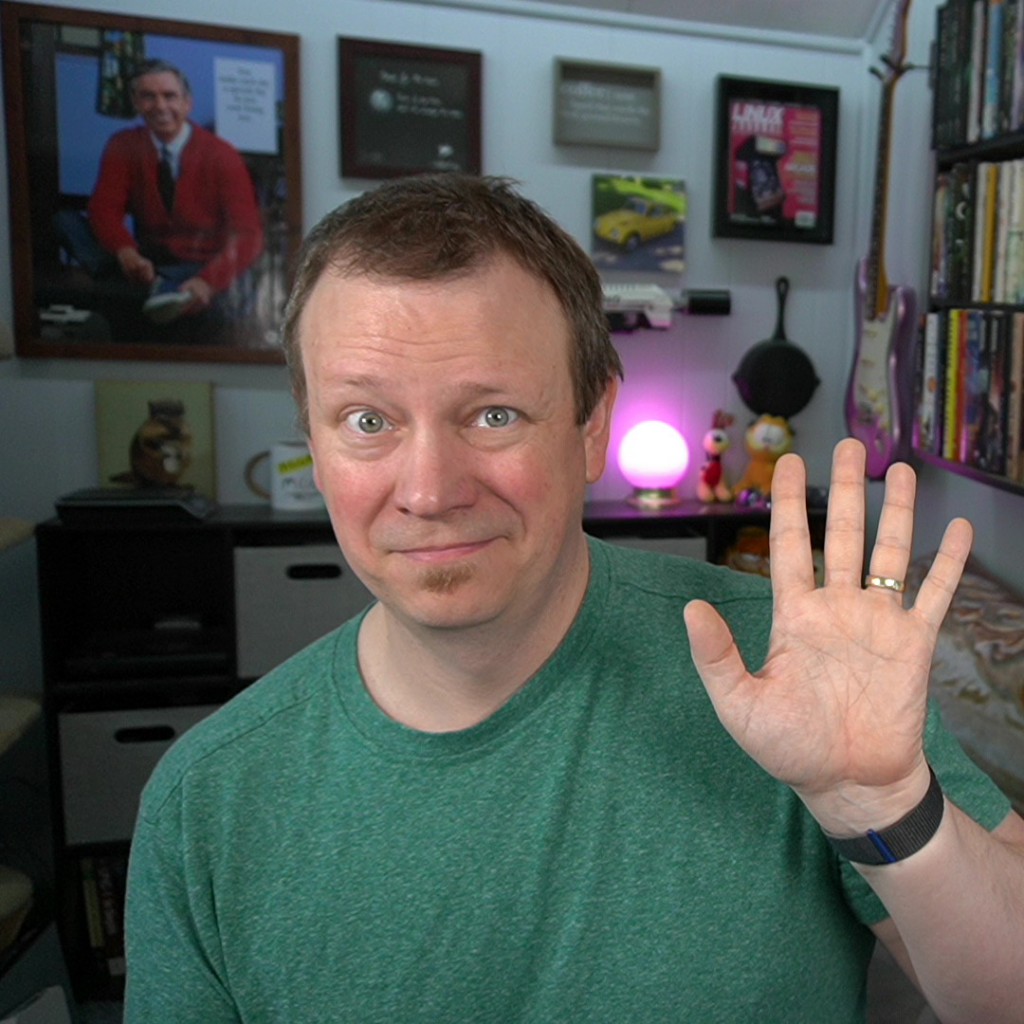
I recently read advice about writing letters to famous people. I think it was in the Steal Like an Artist Trilogy by Austin Kleon, which is a wonderful set of books. (I’ve listened to the audio version several times) This is not a letter to him, however. The point was that you can write letters to famous people, but it’s not fair to expect a reply, because their fame makes it very difficult to read all the letters they receive, much less reply. Fred Rogers was an exception to that rule, and sadly I never thought to write him in my youth. I regret that often, because since he did reply to all the letters he received, I could have a personal letter from Mister Rogers hanging on my wall right next to the poster of him which you can see in my online videos. But I digress.
This is a letter to John and Hank Green. Or Hank and John Green. I have no idea if there’s a rivalry about whose name goes first.
Dear Green Brothers,
I’m not actually a long time fan. That’s not a poor reflection on you, it just felt like something I should get out of the way, because a fan letter sort of assumes fandom. And while I appreciate you both, I still have no idea what most of the inside jokes you reference mean. (Things like “pizza-mas” and “nerdfight-stuff” mean little to me) But due to unfortunate circumstances, I’ve had the fortune to watch many, many, MANY of your vlogbrothers videos. So many, in fact, that I felt compelled to write this letter. Because while you had no idea that I watched hours and hours of you both, around day 4 it started feeling creepy. So this is me, waving my hand in the air and acknowledging the weirdness, and explaining that I’m currently on day 17 of a pernicious Covid infection that just won’t go away. And so I’ve watch a LOT of YouTube. And totally getting my money’s worth from that YouTube Premium subscription.
John, I first saw you when someone passed along a link to your video about Mister Rogers. Hank, I didn’t know John had a brother, and so the first time someone mentioned you in conversation (my daughter I believe, because her teacher played CrashCourse videos in class) I assured her that no, it was “John” not “Hank”. A quick googling ensued, and it turns out that you too are a real human, and thus was born my understanding that there are TWO brothers Green, each awesome in their own way. (See? I kinda warned you I wasn’t a very good fan. No pizza for me. If that’s a pizza-mas thing. Again, I don’t really know)
Still, even with my total lack of fan juice, and a mere inkling of the Green Brothers Mythos, I felt compelled to write you. Yes, yes, partially because I felt creepy devoting my Covid isolation binging your channel. But honestly, that was partially YouTube’s fault. As I blankly stared at my phone, the YouTube algorithm kept feeding me vlogbrother videos. (Very much not in any sort of order, which was odd, but also somehow still worked).
Wow, I really need to get over myself. The focus on me feeling creepy is starting to get creepy itself.
I’m writing for probably the same reason many people write to you. You’re both very relatable, and present yourselves as quite genuine. It’s possible you’re just really good actors, and the “regular old nerd” persona is just an act, but that seems unlikely. It’s also intimidatingly impressive how professionally successful you’ve both become. I’m pretty sure you’re both younger than me (I’ll turn 47 next month), and your accomplishments are not only admirable — but downright world-changing. And while you both seem humble about the multitude of things you do, the ripple effects of just being you are probably not always easy to see.
My tiny YouTube channel where I create Linux training to help people find a fulfilling career is just that, tiny. And my video style has always been simplistic. But it’s not like your vlogbrothers videos are exactly high production quality, and yet they continue to resonate with people. You give away the vast majority of your creations, and a huge percentage of the money you bring in, and yet manage to live indoors and regularly eat warm meals. And while we obviously don’t know each other, you’ve become the pair of humans I can regularly point to (mentally, I promise I’m not really stalking you) and say, “See? There’s a way to be the sort of person I want to be, while still being able to afford food!”
"I desire to give away the best parts of myself, so at the end of my life, the stuff buried is of no consequence. And my best bits will be immortal.” -Me 🙂
So thank you. Not for anything in particular that you’ve done, but just for doing the things “out loud” so people like me can see it work. While it’s unlikely my influence will spread quite as far as yours, I appreciate that you’ve blazed the trail a bit for kindness and generosity being a road to success. Because whatever the second half of my life looks like, this tweet remains true.
Hank – I’ll see you on Friday. And John, Tuesday. 🙂
Last night I had the opportunity to speak for Linux Dominicana, which is the Linux Users Group in the Dominican Republic. I was approached several months ago by a man who has since become a good friend, asking if I would give a webinar-based talk. As most people reading this know, I’m currently trying to produce more and more content, and hopefully reach more and more people with it. So even though I had concerns over cultural errors I might make, I agreed to do the talk.
Spoiler: I’m very glad I did.
My whole personal “brand” thing about being kind, assuming the best in others, admitting when I’m wrong, etc., is not so much a “brand” as genuinely who I want to be as a human. And so in the months leading up to the talk, a bunch of the leaders joined me in a group chat so I could ask them an annoying amount of questions. I was not worried about embarrassing myself (clearly, based on most of my public interactions, I have no problem looking silly). But I was very concerned that I would make an offensive comment, or make an assumption out of ignorance that would hurt the feelings those attending. I gave my rough talk outline (it was about Linux as a vehicle to a career), and I asked awkward questions about job opportunities, difficulties with language barriers, salary inequalities, and how things “work” in the Dominican Republic.
This group of folks were so patient, and so kind, my gratitude doesn’t seem like enough payment for all the education they provided me. After a couple months of trying to learn Spanish, it was clear I wouldn’t be anywhere close to capable of conversation in their native language, and still they were nothing but patient with my litany of questions. Honestly, I was probably rather annoying. And even though I learned a lot about Dominican people, and even about Latin America in general — the upcoming talk was more distressing than pretty much any other talk I’ve given. (OK, the Ohio LinuxFest keynote address where I lost my entire presentation the night before was pretty stressful, but this was a different sort of stress.)
See… I wasn’t sure I’d be relatable. Don’t get me wrong, human stories are about humans, and in general we can empathize if we try. But would my life experiences translate (literally and figuratively) to another culture? I normally weave sarcasm and self deprecation into my talks, but sarcasm is often hard to pick up in your native language, so my standard go-to would probably fall flat. Plus, my talk wasn’t really about anything technical. It was a story about how I found my passion, and how those passions helped me in my own career. It was a very “soft” talk for a group of hardened IT professionals.
How did it go? I think the talk went fine. (That link will start the talk when it switches to English) It wasn’t earth-shattering. It was a story-based look at my career, with a few pointers for finding passion of your own. And an awkward section about the unfair importance of speaking English. Again, it wasn’t a bad talk. But it wasn’t amazing by any stretch of the definition.
But it was significant.
What I didn’t mention earlier is that this was the first time they’ve had one of their presentations in English. I was even one of the first (maybe the actual first) presenter without a tie to the Dominican Republic at all. Heck, I’m so white I’m almost clear! They did this on purpose, but I didn’t realize it was that out of the ordinary until I was chatting with the group of leaders the day before the talk. Whether or not my talk went well, they assured me it was ground-breaking. Assuming the attendees enjoyed the talk, it probably means they will have future speakers from other places with different views and different insights. And I got to be the first person to open that door. I’m still so very humbled.
I hope my mediocre talk, where I tried to speak more slowly than normal (I talk fast when I get excited) was enough to tear down a few cultural walls. The kindness of commenters, saying things in English so I could understand it, was really quite touching. This group of Dominicans will always have a special place in my heart. And once winter sets in, I might find out if their offers of helping me get the most out of a trip to the DR were genuine. And to be honest, I already know they were. Because along with being the first English-only speaker to their group, I also made a pretty great group of friends. And that. That is how we change the world.
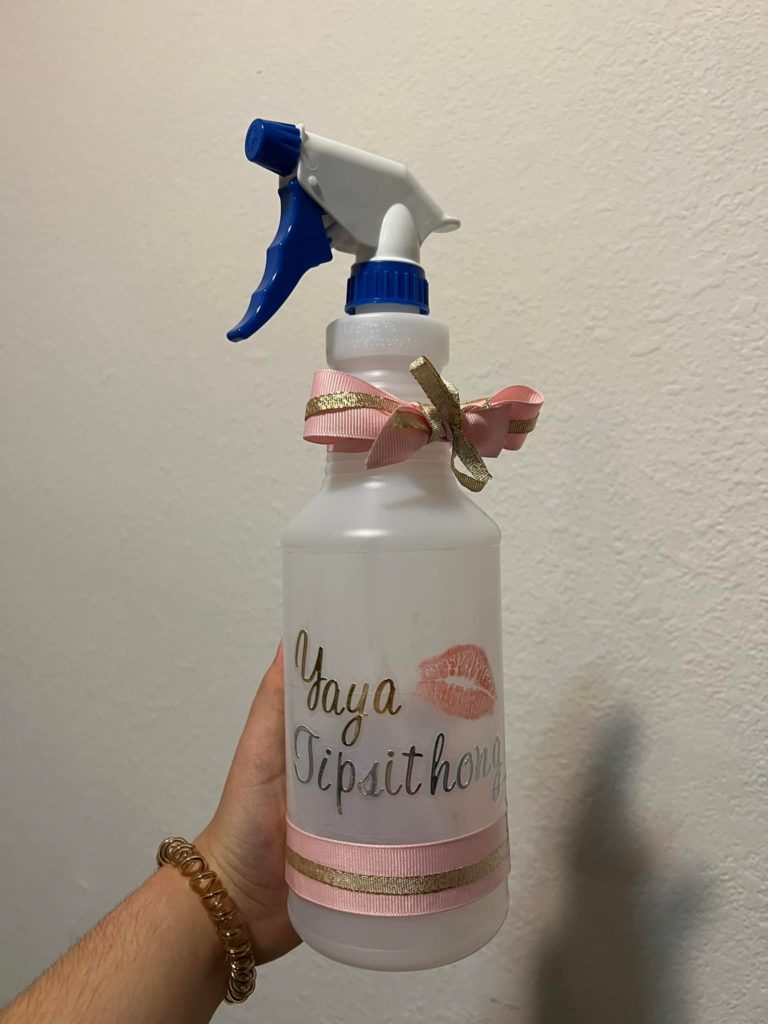
I was scrolling through social media the other day, and ran across this photo. I laughed out loud, because a bottle of cleaning spray decorated like this is the most Yaya thing I could imagine. I mean, these things are usually “decorated” with a Sharpie marker declaring what sort of cleaner is inside the bottle. Or maybe a piece of masking tape declaring the owner’s name. But not this bottle. This looks like a centerpiece for the head table at a fancy dinner or something. It’s SO Yaya. But I should step back a bit.
Yaya (the name she chose to use in America), or Tipsithong Keawlaor, (whose last name I butchered while announcing at basketball games, and still get horribly wrong) is a young lady from Thailand who was an exchange student at the school where my wife teaches. She’s here in the US again, and based on her post, she’s working on the cleaning crew at a hotel or some such thing. She doesn’t normally post about cleaning supplies, and if you see her on social media, or honestly in real life, she appears to be the most vapid, selfie-crazed young woman you could imagine. She lives her life very much out loud, and between duck-lip poses and over-romantic hashtags — she really appears to be an extra superficial example of everything wrong with the Internet.
But she’s not.
Yaya does certainly enjoy attention. But she doesn’t seek attention at the expense of others. She might appear to be “full of herself”, but that too is an assumption which doesn’t stand up to scrutiny. Yaya is an incredibly kind-hearted young woman, who doesn’t shy away from helping others, even when there’s no glory in it for her. She enjoys the limelight, but I’ve literally seen her chopping lime leaves in the kitchen while helping cook food for a fundraiser. She will work hard to help others, even when it’s not required, even when she’s unseen — but will also happily draw all the attention in a room for no other reason than to be the center of attention. She’s truly an enigma.
OK, So What is She Hiding?
Does Yaya draw attention to herself in order to distract from insecurities she’s trying to hide? I have no idea. I know that I do that (and so Blue, in my comic, does as well).
But more importantly, Yaya doesn’t prop herself up by pushing others down. And I think it’s vital to make that distinction. She might very well struggle with inner demons, self doubt, insecurities, and a myriad of other emotional difficulties. Her over-the-top photos might be a way to hide from herself.
And maybe not.
My point is this: We often hear that comparing our lives to what we see our friends posting on social media is unhealthy, because people generally only post the good things. And that is very good advice. Our lives are more than a highlight reel, and sometimes those with incredible highs are also struggling with incredible lows. Unfortunately, we often deal with that reality in a very unhealthy way.
We Do The Thing Ourselves
Remember when I said that Yaya doesn’t prop herself up by pushing others down? It was literally 2 paragraphs ago. The thing is, when we try to accept that social media is often a highlight reel of the best a person experiences, we equate that to being shallow. We tell ourselves that of course they’re faking, and they’re really miserable, just vying for attention. Heck, we go so far as to pity them for needing the attention of others. We judge them for being happy, because we’re secretly jealous that we’re not.
So here’s my takeaway. You’re welcome to join me, or to just find me naive. I strive to assume the best in people. If someone shares a blessing in their life, and it doesn’t appear to be at the expense of someone else? I’m going to try my very best to be genuinely happy for them. If someone appears to be shallow, I’m going to assume they’re just not sharing the depth of who they are online. And if someone chooses to never share the difficulties they certainly face, I’m going to hope those difficulties pale in comparison to the joy they do share. Because honestly, someone else being happy does not make me less so. And if someone I care enough to follow on social media has good things happen to them? Knowing about it actually makes me pretty happy too.
Yaya, I hope you’re as happy as you portray on social media. Because you’re a wonderful human being, and you deserve all the joy life has to offer. And living life to the fullest is such a Yaya thing to do…
Several years ago, I was asked to speak at a bible camp in southern Michigan. It wasn’t my first time speaking there, and I’d been a youth group leader at our local church for years, so my talk wasn’t vetted before I was allowed to speak to a couple hundred teenagers. And no, I didn’t actually do or say anything that was inappropriate – but my talk affected me far more than any of the teenagers who heard it. Because I inadvertently deceived them. All of them.
If you’ve been given the opportunity to speak to groups of people, you probably know that using stories is one of the best ways to engage an audience. Stories reveal our humanness, and bridge gaps in our experiences. Even if you haven’t experienced the same things I’ve experienced, when I tell a story, you get to join me in my joy and pain and ultimately in my life. For the brief moment when I tell you a story, you become me, you walk my path, and my experiences become a part of who you are too. Really, stories are amazing.
Fictional stories can do this too. They really can. Just like you can live my experiences if I tell you my stories, we can all live experiences told in fiction, and better understand the human condition in scenarios that never actually happened! Heck, Jesus himself did this with parables. There was no actual woman who lost a coin and then partied when she found it. It was fiction. The important part though, is that people understood Jesus was telling a fictionalized story. He didn’t say, “My Mom Mary lost a coin once, and oooh boy did we have to search for it…”
The Three-armed Sweater
So back to Bair Lake (the camp I where I was speaking). I honestly don’t remember the particular lesson I was teaching, but based on context, I’m guessing it was a lesson about grace and kindness. And as a young(ish) youth group leader, and a speaker known for being fun and animated, I decided to tell a story about a funny situation regarding a Christmas gift. I was a pretty crafty writer and storyteller at the time, so this story was almost certainly funny and engaging, while driving home whatever point I was tasked to teach. And heck, I was using a parable, just like Jesus! The talk was bound to be legendary in the annals of Bair Lake history. Sadly, I made a fatal mistake.
My “parable” was about a sweater I received one Christmas from my beloved aunt. My aunt (whose fictional name is lost to me now) was in mental decline, but spent a large portion of her time knitting sweaters for all her nieces and nephews, so she’d have Christmas gifts for all of them. As her mental acuity waned, the sizing and consistency of sweaters declined as well. One Christmas, the sweater I received from this beloved aunt had a third arm. I don’t remember the details, but I’m sure the fictional me was gracious, and appreciated the time and thoughtfulness knitted into the garment which I’d never be able to wear. Heck, there was probably even a situation where I had to wear the sweater, and somehow honor the aunt while also protecting her from ridicule. But it’s not the story I remember about that summer. It’s the effect it had on the teenagers.
See, it worked. I’d managed to teach my lesson, and pull their heartstrings, and even offer them a glimpse at the joy which only comes from serving others. They learned to be gracious, and kind, and in turn they were kind and gracious to me. They asked me about my aunt. They wondered if I had pictures of the sweater, not to mock, but so they could share in the story even more. One of the other leaders asked if they could share my story with their own youth group back home, because it resonated with the group of campers so well.
But it was all a lie, and I was the only one who knew it.
Fiction Can Teach Truth, But a Lie is a Lie
I didn’t set out to deceive anyone. Truly. But like I said, I was a fairly good storyteller, and the story of my aunt was compelling. It honestly never occurred to me that someone would think the story was a real situation from my life. I crafted it like a parable, or so I thought, and just like there was no actual prodigal son who slept with swine, there was no Aunt (Gertrude? I honestly don’t remember) who knitted me a three-armed sweater. But I told the story as if it were true. So people believed me.
It’s possible the story of my aunt is still being told by people at that bible camp who were particularly moved. And for them, it’s a story that works. For them it’s not a lie, it’s a story. It’s a story they once heard, and its basis in fact is no longer what matters. But for me, it made for a terrible week of camp. Because every time someone came to me and asked about my aunt, I had to tell them that I didn’t really have an aunt who made sweaters, it was just a story I made up to illustrate a point. And they were crestfallen. A story that gave them hope and clarity, helping them to understand grace and kindness instantly turned into them feeling duped and betrayed. All because I didn’t frame the story correctly.
Good Stories Can Be Fictional, but They Can’t Be Lies
That experience still haunts me. I’d like to think it made me a better person, but the cost was painful. Stories are what bind us together as humans, and with good intent, I broke whatever trust those campers had in me. Rather than learning the lesson I intended, those who found out it was made up learned I was a scam artist. I’d fooled them with my storytelling skills, and they felt dumb for believing me.
Could there have been a follow-up lesson on forgiveness? You bet. Heck, it probably would have been a pretty great talk about consequences from unintentional wrongdoing. The speaker could use my situation as a way to explain how forgiving someone benefits you as much as the person you’re forgiving. But it’s not a lesson I could teach, because for that group, I was the guy who lied about the sweater.
Stories are powerful. Fictional stories can be just as powerful as real stories. But even fictional stories have to be honest. Because while truth doesn’t have to be true, it does need to be honest.